
Understanding Serious Mental Illness (SMI): Treatment & Residential Care in Mesa, AZ
Living with a serious mental illness can affect nearly every part of a person's life. Symptoms may make it difficult to maintain employment, succeed in school, manage everyday responsibilities, maintain relationships, or establish a healthy daily routine.
For some individuals, traditional outpatient services alone may not provide enough structure or day-to-day support. Residential mental health treatment in Mesa, Arizona can provide a supportive environment where individuals can focus on stability, medication routines, daily living skills, and greater independence.
At Serenity Circle Residential Treatment Center in Mesa, AZ, we support adults living with Serious Mental Illness (SMI), substance use disorders, and co-occurring conditions through structured residential care, case management, medication management, and coordination with outside providers.
What Is Serious Mental Illness (SMI)?
Serious Mental Illness, commonly referred to as SMI, is not one particular mental health diagnosis.
The Substance Abuse and Mental Health Services Administration (SAMHSA) defines SMI in adults as a diagnosable mental, behavioral, or emotional disorder that causes serious functional impairment and substantially interferes with or limits one or more major life activities.
In other words, SMI considers not only a person's diagnosis, but also how significantly their mental health condition affects their ability to function in everyday life.
Conditions that may be associated with SMI include:
- Schizophrenia and other psychotic disorders
- Bipolar disorder
- Major depressive disorder
- Severe anxiety disorders
- Post-traumatic stress disorder (PTSD)
- Other severe or persistent mental health disorders
Having one of these diagnoses does not automatically mean someone meets SMI criteria. The severity, duration, and functional impact of the condition are important considerations.
With appropriate treatment and ongoing support, people living with SMI can manage symptoms, improve functioning, and work toward greater stability and independence.
How Can SMI Affect Daily Living?
One of the defining characteristics of SMI is how significantly symptoms can interfere with everyday functioning. The effects vary from person to person and may change over time.
Work and Employment
Mental health symptoms can affect concentration, motivation, communication, attendance, decision-making, and the ability to manage workplace stress. Someone may have difficulty maintaining employment or completing expected responsibilities.
School and Education
SMI can interfere with concentration, memory, organization, attendance, motivation, and social interactions, making it difficult to complete school or educational programs.
Relationships and Family
Individuals may withdraw socially, have difficulty regulating emotions, struggle with communication, or find it challenging to maintain healthy relationships and boundaries.
Self-Care and Daily Responsibilities
SMI may also interfere with activities such as:
- Maintaining personal hygiene
- Preparing meals
- Keeping a regular sleep schedule
- Taking medications consistently
- Managing finances
- Attending appointments
- Maintaining a home
- Shopping and completing errands
- Maintaining social connections
When these difficulties significantly affect a person's ability to live independently, additional support may be beneficial.
When Might Someone Need a Higher Level of Care?
Not everyone with SMI requires residential treatment. Many individuals successfully manage their conditions through outpatient therapy, psychiatric care, medication, community services, and family support.
However, residential care may be considered when an individual is having increasing difficulty maintaining stability and everyday functioning.
This may include repeated mental health crises, difficulty managing medications, worsening symptoms despite outpatient services, significant disruption of work or school, difficulty completing daily responsibilities, social isolation, or an inability to maintain stability while living independently.
A behavioral health assessment can help determine the appropriate level of care.
How Is Serious Mental Illness Treated?
There is no single treatment plan for SMI. Treatment depends on the individual's diagnosis, symptoms, medical history, needs, strengths, and circumstances.
Treatment may involve medication, psychotherapy, behavioral health services, case management, community resources, and residential support.
Medication and SMI
Medication can be an important part of treatment for many individuals with Serious Mental Illness. Depending on the diagnosis and symptoms, a medical or psychiatric provider may prescribe antidepressants, antipsychotic medications, mood stabilizers, anti-anxiety medications, or other medications.
Serenity Circle does not prescribe psychiatric medications or provide psychiatric services. Instead, our residential team provides medication management and support as part of the individual's established treatment plan.
This may include helping residents maintain consistent medication routines, supporting medication adherence, documenting medications, coordinating refills and appointments, and communicating with outside providers when appropriate.
Therapy and Behavioral Health Support
Therapeutic and behavioral health services can help individuals better understand their symptoms, recognize patterns of thinking and behavior, develop coping strategies, regulate emotions, and improve relationships.
Evidence-based approaches such as Cognitive Behavioral Therapy (CBT) and Acceptance and Commitment Therapy (ACT) may be incorporated into an individual's overall treatment plan when appropriate.
What Is Residential Treatment for Serious Mental Illness?
Residential mental health treatment provides a level of structure and daily support that can be difficult to achieve through outpatient services alone.
Rather than attending appointments and managing the remainder of their care independently, residents live in a structured environment where they can receive assistance with everyday routines, medications, appointments, coping skills, and independent living skills.
For individuals whose SMI has significantly disrupted daily life, residential care can provide an important bridge between higher levels of care and successful independent living.
What Does SMI Treatment Look Like in Residential Care?
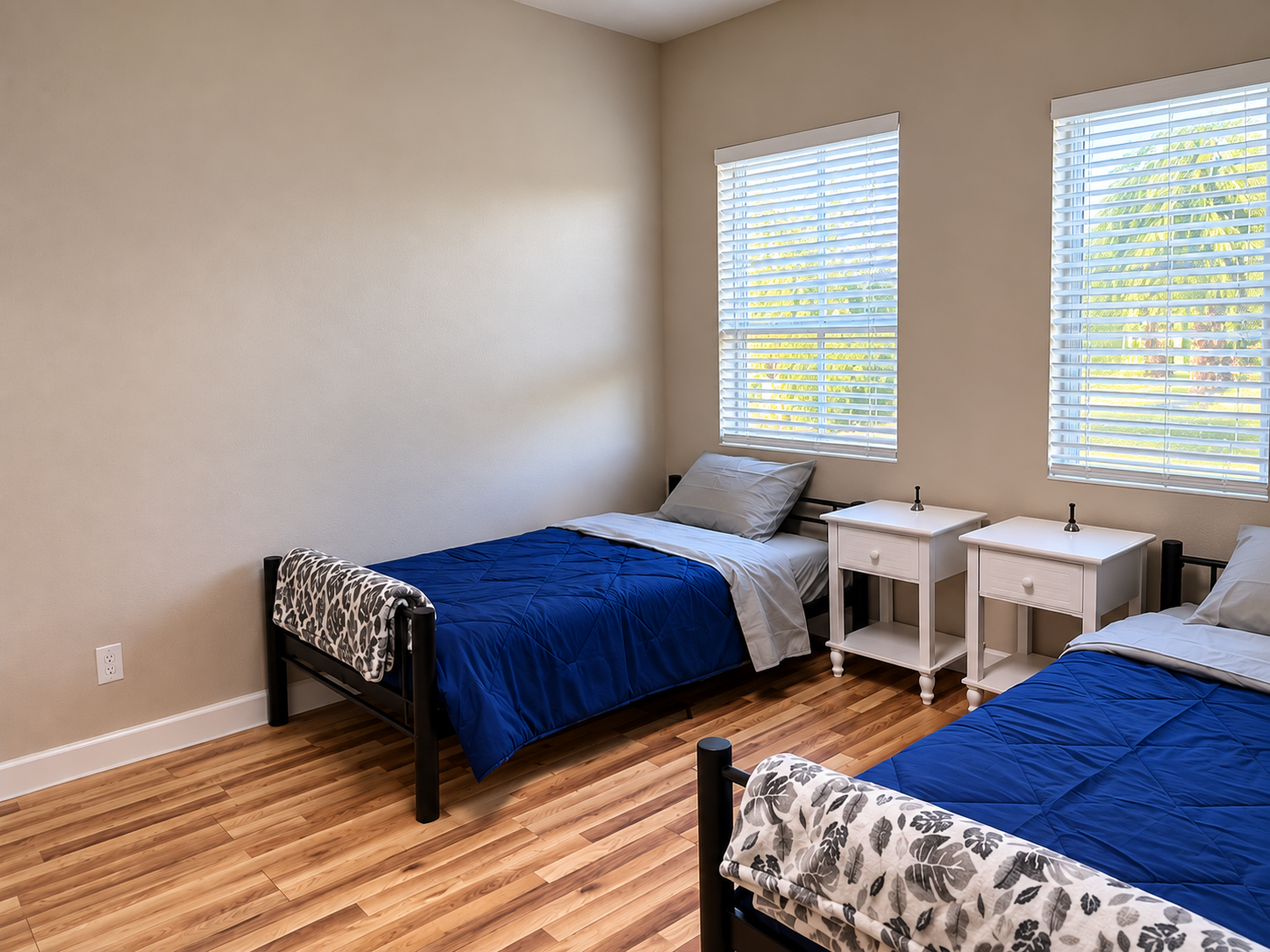
Dignified, comfortable residential bedrooms providing privacy, rest, and routine at Serenity Circle in Mesa, AZ.
Residential treatment for individuals with SMI can provide structure, consistency, and day-to-day support outside of a hospital or psychiatric setting.
At Serenity Circle, residential care focuses on helping individuals manage their mental health while strengthening the skills and routines needed for greater stability and independence.
Depending on an individual's needs and treatment plan, support may include:
- Case management and care coordination
- Medication management and support
- Individual and group behavioral health services
- Trauma-informed care
- Coping and emotional regulation skills
- Life-skills development
- Healthy routines and self-care
- Support with activities of daily living
- Substance use and relapse-prevention support
- Coordination with outside medical and behavioral health providers
- Family involvement when appropriate
- Discharge and aftercare planning
Serenity Circle does not provide psychiatric services onsite. Instead, our team helps residents follow established treatment plans, manage medications appropriately, coordinate services, and maintain connections with outside psychiatric, medical, and behavioral health providers when those services are needed.
SMI and Co-Occurring Substance Use Disorders
Mental health and substance use disorders can occur together. When someone experiences both, this is commonly referred to as a co-occurring disorder or dual diagnosis.
Alcohol or drugs may sometimes be used in an attempt to cope with depression, anxiety, trauma, psychosis, sleep difficulties, or overwhelming emotions. At the same time, substance use can complicate mental health symptoms, medication routines, relationships, and overall stability. Read our comprehensive guide on Dual Diagnosis Treatment in Mesa, AZ to learn how co-occurring conditions interact.
For individuals living with both SMI and a substance use disorder, addressing both conditions as part of an integrated recovery plan can be important for long-term stability.
Understanding SMI Designation in Arizona
The term SMI has additional significance in Arizona's public behavioral health system.
According to the Arizona Health Care Cost Containment System (AHCCCS), an SMI designation involves a qualifying mental disorder that results in severe and persistent impairment in important areas of daily functioning.
An Arizona SMI designation is different from simply having a mental health diagnosis.
Arizona has a formal process for determining SMI eligibility. Individuals who receive an SMI designation may have access to additional behavioral health services and supports through Arizona's public behavioral health system.
Individuals or families who are unsure about SMI designation or available benefits can contact AHCCCS or their behavioral health provider for additional information.
How Serenity Circle Helps Adults With SMI in Mesa, AZ

A peaceful, home-like environment designed for healing, stability, and growth in Mesa, Arizona.
At Serenity Circle Residential Treatment Center in Mesa, Arizona, we understand that Serious Mental Illness can affect much more than someone's mental health symptoms. It can impact relationships, employment, independence, self-care, medication routines, daily responsibilities, and overall quality of life.
Our residential program provides a structured, supportive environment where adults with SMI can receive day-to-day assistance while continuing to work with their established medical, psychiatric, and behavioral health providers.
Serenity Circle can help residents with:
- Case management and coordination of care
- Medication management and support
- Maintaining appointments with outside providers
- Following established treatment recommendations
- Developing healthy daily routines
- Strengthening independent living skills
- Improving self-care and personal responsibility
- Building coping and emotional regulation skills
- Addressing substance use and co-occurring conditions
- Preparing for greater independence
- Planning for continued care after residential treatment
Our goal is not simply to provide a place to live. It is to provide a stable, structured residential environment where individuals can strengthen the skills, routines, and support systems they need to successfully manage life with Serious Mental Illness.
Finding Residential SMI Treatment in Mesa, Arizona
Finding the right level of mental health care can feel overwhelming, especially when an individual is struggling to manage everyday responsibilities.
If SMI is interfering with daily living, relationships, employment, school, medication management, or the ability to maintain stability in the community, residential care may provide additional structure and support.
Serenity Circle Residential Treatment Center in Mesa, AZ supports adults living with Serious Mental Illness, substance use disorders, and co-occurring conditions in a structured residential environment focused on stability, daily living skills, and greater independence.
Contact Serenity Circle today to learn more about SMI residential treatment in Mesa, Arizona and whether our program may be appropriate for you or someone you care about.
Frequently Asked Questions About SMI in Arizona
If you or someone you know is experiencing a mental health crisis or having thoughts of suicide or self-harm, call or text the 988 Suicide & Crisis Lifeline at 988. In a life-threatening emergency, call 911.
Key Takeaways
- SMI describes mental health conditions that cause serious functional impairment — it is not a single diagnosis.
- SMI can affect work, school, relationships, self-care, and the ability to live independently.
- Residential treatment offers structured, day-to-day support when outpatient care is not enough.
- Serenity Circle coordinates medication management and care with each resident's outside psychiatric and medical providers.
- An Arizona SMI designation is a formal process that is separate from having a mental health diagnosis.
Serenity Circle Clinical Team
The Serenity Circle Clinical Team brings together licensed therapists and in-house case management together with psychiatric providers and community resources, dedicated to trauma-informed residential care for severe mental illness, substance use, and dual diagnosis in Mesa, AZ.
Ready to Take the Next Step?
Our admissions team is here to listen with compassion and answer every question — no pressure, no judgment.