
What Trauma-Informed Care Really Means in Residential Treatment
When someone enters residential treatment for a severe mental illness, a substance use disorder, or a dual diagnosis, they rarely arrive with just one challenge. Most carry the weight of trauma — experiences that shaped how they see themselves, how they trust others, and how they respond to stress. At Serenity Circle Residential Treatment Center in Mesa, AZ, trauma-informed care is not a label we add to a brochure. It is the foundation of everything we do, from the first phone call to discharge planning and beyond.
What Is Trauma-Informed Care?
Trauma-informed care is an approach that recognizes the widespread impact of trauma and understands the paths to recovery. Rather than asking, “What is wrong with you?” a trauma-informed clinician asks, “What happened to you, and how can we help you feel safe enough to heal?”
In a residential treatment setting in Mesa, AZ, this means designing every interaction — intake, therapy, medication management, meals, and downtime — around the principles of safety, trustworthiness, peer support, collaboration, empowerment, and cultural responsiveness. For clients living with severe mental illness (SMI) or co-occurring substance use disorders, this approach can be the difference between merely stabilizing symptoms and truly beginning to heal.
Why Trauma Matters in SMI and Dual Diagnosis Treatment
Research consistently shows that trauma is a near-universal experience among people diagnosed with severe mental illness and those seeking treatment for addiction. Unaddressed trauma can drive the very symptoms that bring someone into residential care — emotional dysregulation, dissociation, substance use as self-medication, and difficulty trusting providers.
When a residential program treats only the diagnosis and ignores the trauma underneath, clients often cycle in and out of care. True stabilization in Mesa, Arizona requires a setting where the nervous system can settle, where triggers are anticipated rather than punished, and where clinicians are trained to recognize trauma responses in real time.
How Serenity Circle Weaves Trauma-Informed Care Into Daily Life
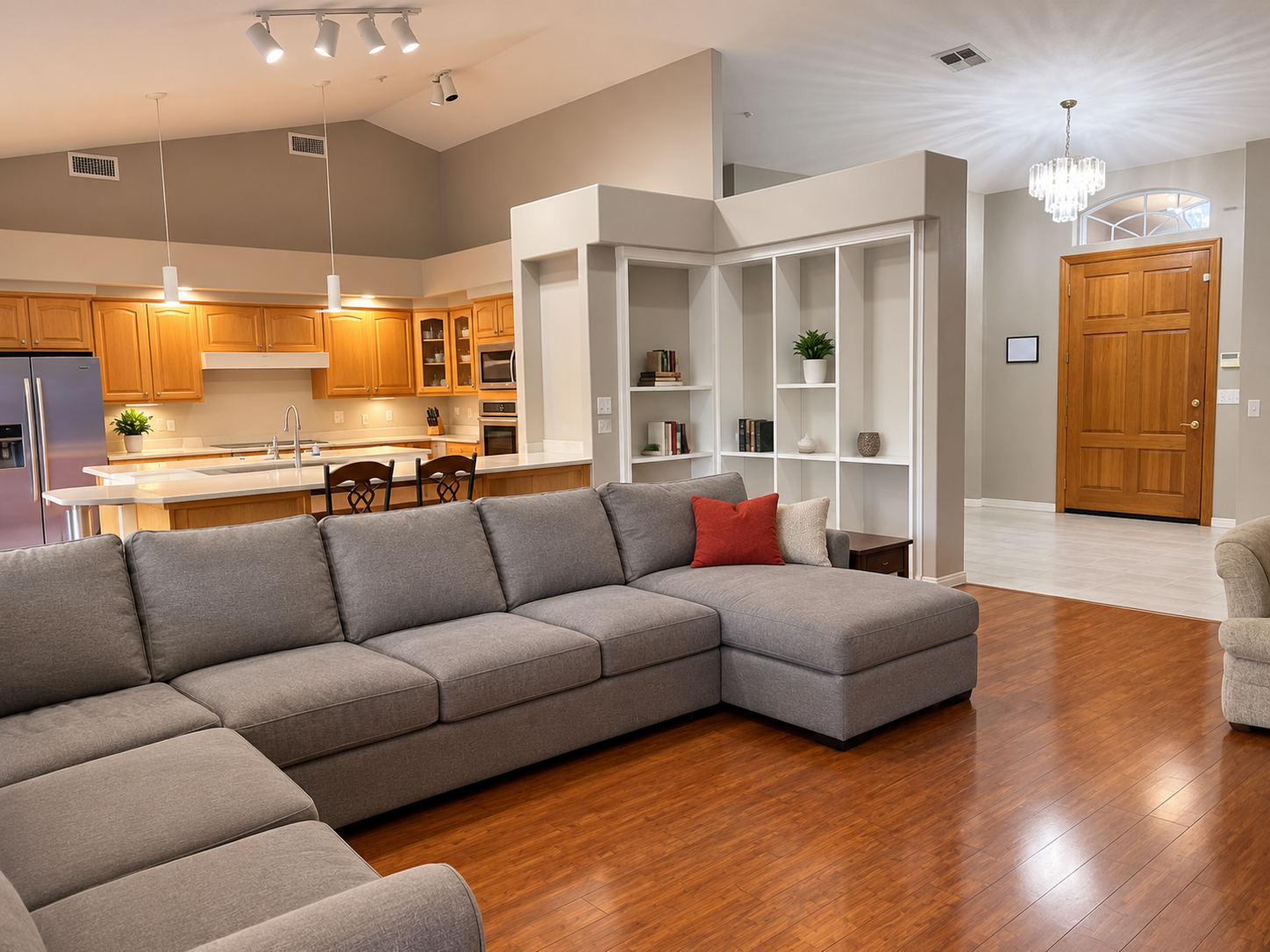
Our intimate 10-bed residential community in Mesa was intentionally designed for trauma-informed healing. A small setting means clients are known by name, not by bed number. Predictable routines, quiet spaces, and a home-like (not hospital-like) environment help an overtaxed nervous system begin to feel safe — the prerequisite for any deeper therapeutic work.
Every member of our team, from clinical staff to support roles, is trained in trauma-responsive practices. We explain choices before we make them, we ask before we touch, and we never use confrontation or coercion as a clinical tool. Clients help shape their own treatment plans, because empowerment — not control — is what rebuilds trust after trauma.
Safety, Choice, and Trust in Practice
Safety is both physical and emotional. In our Mesa residential program, that looks like private, dignified living spaces; clear, consistent expectations; and clinicians who notice when a client is becoming dysregulated and respond with grounding rather than escalation.
Choice is restored in small, meaningful ways — which therapeutic groups to join, how to pace disclosure, what coping skills to practice first. For many clients whose trauma involved powerlessness, these small choices are the first steps back toward agency. Trust is built slowly and earned, never demanded, through transparency about treatment, medications, and what to expect each day.
What This Means for Families in Mesa, AZ
Families often feel helpless when a loved one is struggling with severe mental illness or addiction. Understanding that trauma-informed care exists — and that there is a licensed residential treatment center in Mesa, Arizona committed to it — can bring real relief. We work with families to help them understand trauma responses, set healthy boundaries, and become part of a sustainable recovery plan rather than a source of stress.
If you are searching for residential treatment in Mesa, AZ for yourself or a loved one, ask any program a simple question: how does your team respond when a client is triggered? The answer tells you whether trauma-informed care is a practice or just a phrase.
Key Takeaways
- Trauma-informed care asks “what happened to you?” rather than “what's wrong with you?”
- Unaddressed trauma often drives the symptoms of SMI, addiction, and dual diagnosis.
- A small, home-like residential setting in Mesa helps the nervous system feel safe enough to heal.
- Safety, choice, and trust are practiced daily — not just in therapy sessions.
- Families are invited into the recovery process as partners, not bystanders.
Serenity Circle Clinical Team
The Serenity Circle Clinical Team brings together licensed therapists and in-house case management together with psychiatric providers and community resources, dedicated to trauma-informed residential care for severe mental illness, substance use, and dual diagnosis in Mesa, AZ.
Ready to Take the Next Step?
Our admissions team is here to listen with compassion and answer every question — no pressure, no judgment.