
Understanding the Role of Medication Management in Mental Health Recovery
For many people living with mental health conditions, medication can be an important part of maintaining stability and managing symptoms. But taking medication consistently can become difficult when someone is also dealing with depression, anxiety, Serious Mental Illness (SMI), substance use, memory difficulties, or challenges with everyday routines.
Medication management helps individuals stay organized and consistent with medications that have been prescribed by their medical or psychiatric providers.
At Serenity Circle Residential Treatment Center in Mesa, Arizona, medication management is part of the structured support we provide to help residents follow their established treatment plans, maintain continuity of care, and work toward greater stability and independence.
What Is Medication Management?
Medication management involves helping an individual safely and consistently follow their prescribed medication regimen.
Depending on the individual's needs, this may involve:
- Maintaining a consistent medication schedule
- Supporting medication adherence
- Keeping accurate medication records
- Coordinating prescription refills
- Helping residents keep medical appointments
- Monitoring for concerns that should be reported to a provider
- Communicating with outside healthcare providers when appropriate
- Helping residents understand the importance of following their prescribed treatment plan
It is important to distinguish medication management from medication prescribing.
Serenity Circle does not provide onsite psychiatric services or prescribe psychiatric medications. Medications are prescribed and adjusted by the individual's appropriate outside medical or psychiatric provider. Serenity Circle helps residents manage those medications as part of their daily routine and coordinates with outside providers when necessary.
Why Is Medication Management Important?
Mental health medications generally need to be taken according to the instructions provided by the prescribing healthcare professional.
However, maintaining a medication routine isn't always easy.
Someone may forget a dose, take medication at inconsistent times, run out before requesting a refill, miss appointments with a provider, or stop taking a medication because they are feeling better.
Mental health symptoms themselves can also make medication management more difficult.
A structured medication routine can help residents remain consistent with their prescribed treatment while reducing some of the organizational challenges involved in managing medications independently.
Medication Management and Serious Mental Illness (SMI)
Medication management can be particularly important for individuals living with Serious Mental Illness (SMI).
Conditions associated with SMI may significantly affect concentration, organization, motivation, memory, judgment, or the ability to maintain everyday routines.
For some individuals, medications prescribed by a psychiatric or medical provider are an important component of an overall treatment plan.
Residential support can help individuals develop a consistent routine around medications while also addressing other areas of daily functioning, such as self-care, appointments, relationships, household responsibilities, and independent living skills.
The goal is not simply to make sure medication is taken. It is to help residents develop the routines and skills necessary to become as independent as possible in managing their overall health and wellness.
Medication Is One Part of a Larger Treatment Plan
Medication can be valuable, but mental health recovery rarely depends on medication alone.
A comprehensive behavioral health plan may also include:
- Individual and group behavioral health services
- Coping and emotion regulation skills (DBT)
- Trauma-informed care and EMDR therapy
- Healthy daily routines
- Life-skills development
- Substance use treatment
- Relapse-prevention strategies
- Case management
- Supportive relationships
- Community resources
- Continuing-care planning
Medication management works alongside these services rather than replacing them.
For example, medication may help reduce certain symptoms while behavioral health services help an individual develop healthier coping strategies, improve relationships, and learn to manage stress more effectively.
Medication Management and Dual Diagnosis
Medication management can become more complicated when someone experiences both a mental health condition and a substance use disorder, commonly known as a dual diagnosis or co-occurring disorder.
Alcohol and drugs can potentially interact with medications, interfere with adherence, and complicate mental health symptoms. Someone experiencing substance use challenges may also have difficulty remembering medications, attending appointments, requesting refills, or following treatment recommendations.
For individuals with co-occurring conditions, medication management can therefore be one part of a broader recovery plan that addresses both mental health and substance use.
Residents should always discuss medication questions, possible interactions, side effects, and changes in symptoms with their prescribing healthcare provider.
Why Medication Management Helps in Residential Treatment
One of the benefits of residential behavioral health care is consistency.
In an outpatient setting, someone may see a provider periodically but remain responsible for managing medications and appointments independently between visits.
Residential treatment provides a structured environment where healthy routines can be practiced every day.
Residents can learn to incorporate medications into a regular schedule, become more aware of their healthcare responsibilities, maintain appointments, and gradually develop the skills needed to manage their treatment more independently.
This is particularly valuable when mental health symptoms have previously made it difficult to maintain consistency.
What Happens if a Medication Isn't Working?
Medication needs can change over time.
An individual may experience side effects, new symptoms, changes in existing symptoms, or concerns about whether a medication is helping.
Serenity Circle does not independently change, discontinue, or prescribe psychiatric medications.
When concerns arise, our role is to help residents communicate with the appropriate prescribing provider so that the provider can evaluate the situation and determine whether any changes are needed.
Residents should not stop or alter a prescribed medication without guidance from the healthcare professional responsible for their medication treatment.
Building Medication Independence
Medication management in residential treatment should not simply create dependence on staff.
An important goal is helping residents become more involved in understanding and managing their own healthcare whenever appropriate.
This may include learning to:
- Follow a medication schedule
- Keep track of appointments
- Recognize when refills are needed
- Communicate questions or concerns
- Understand which provider manages each medication
- Follow provider instructions
- Incorporate medications into a healthy daily routine
These skills can help prepare residents for a less structured environment after residential treatment.
Medication Management at Serenity Circle in Mesa, AZ
At Serenity Circle Residential Treatment Center in Mesa, Arizona, medication management is part of a broader approach to helping adults develop stability, healthy routines, and greater independence.
We support adults experiencing mental health conditions, SMI, substance use disorders, and dual diagnosis.
Depending on an individual's needs, Serenity Circle can provide:
- Medication management and support
- Case management
- Care coordination
- Assistance maintaining outside appointments
- Communication with outside providers when appropriate
- Healthy daily routines
- Life-skills development
- Behavioral health support
- Substance use and relapse-prevention support
- Preparation for greater independence
Serenity Circle does not provide psychiatric services onsite or prescribe psychiatric medications. Our team works within the resident's established treatment plan and helps coordinate care with outside medical, psychiatric, and behavioral health providers.
This allows residents to receive the everyday structure and support of residential treatment while maintaining appropriate relationships with the healthcare professionals responsible for their medications.
Medication Management & Residential Treatment in Mesa, Arizona
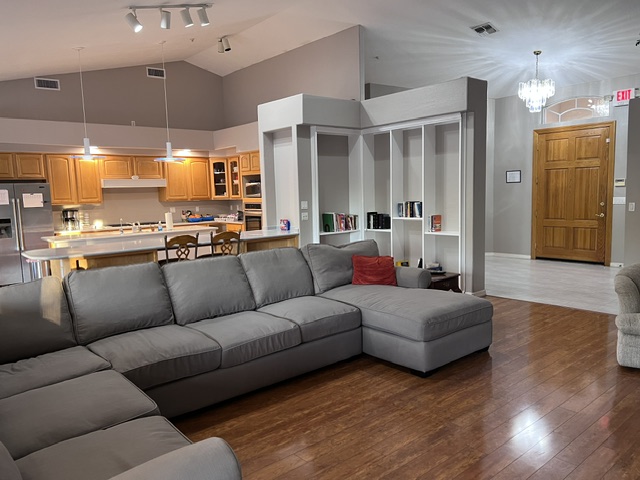
A comfortable, home-like residential environment designed for stability, routine, and independence in Mesa, Arizona.
For someone struggling with mental health symptoms, SMI, substance use, or co-occurring conditions, maintaining medications and healthcare responsibilities can sometimes become overwhelming.
A structured residential environment can provide additional support while helping individuals develop the routines and skills necessary for greater independence.
Serenity Circle Residential Treatment Center in Mesa, AZ provides medication management, case management, care coordination, behavioral health support, and life-skills development within a supportive residential setting.
Contact Serenity Circle today to learn more about residential behavioral health treatment and medication management in Mesa, Arizona.
Frequently Asked Questions About Medication Management
If you or someone you know is experiencing a mental health crisis or having thoughts of suicide or self-harm, call or text the 988 Suicide & Crisis Lifeline at 988. In a life-threatening emergency, call 911.
Key Takeaways
- Medication management helps residents safely and consistently follow routines prescribed by their outside doctors.
- Serenity Circle does not prescribe medications or offer onsite psychiatric care; we coordinate with outside providers.
- A predictable residential schedule reduces organizational burden and promotes medication adherence.
- Medication works best alongside therapy, life skills, emotion regulation, and relapse-prevention support.
- The ultimate goal is building practical routines so residents gain greater confidence and independence in their care.
Serenity Circle Clinical Team
The Serenity Circle Clinical Team brings together licensed therapists and in-house case management together with psychiatric providers and community resources, dedicated to trauma-informed residential care for severe mental illness, substance use, and dual diagnosis in Mesa, AZ.
Ready to Take the Next Step?
Our admissions team is here to listen with compassion and answer every question — no pressure, no judgment.